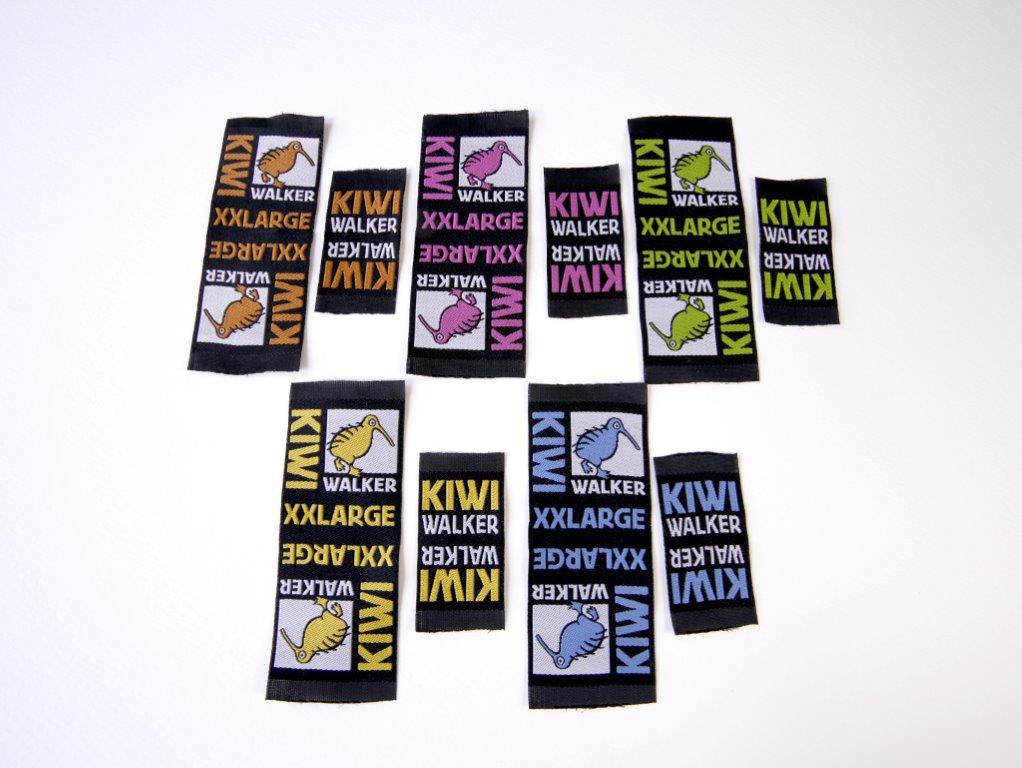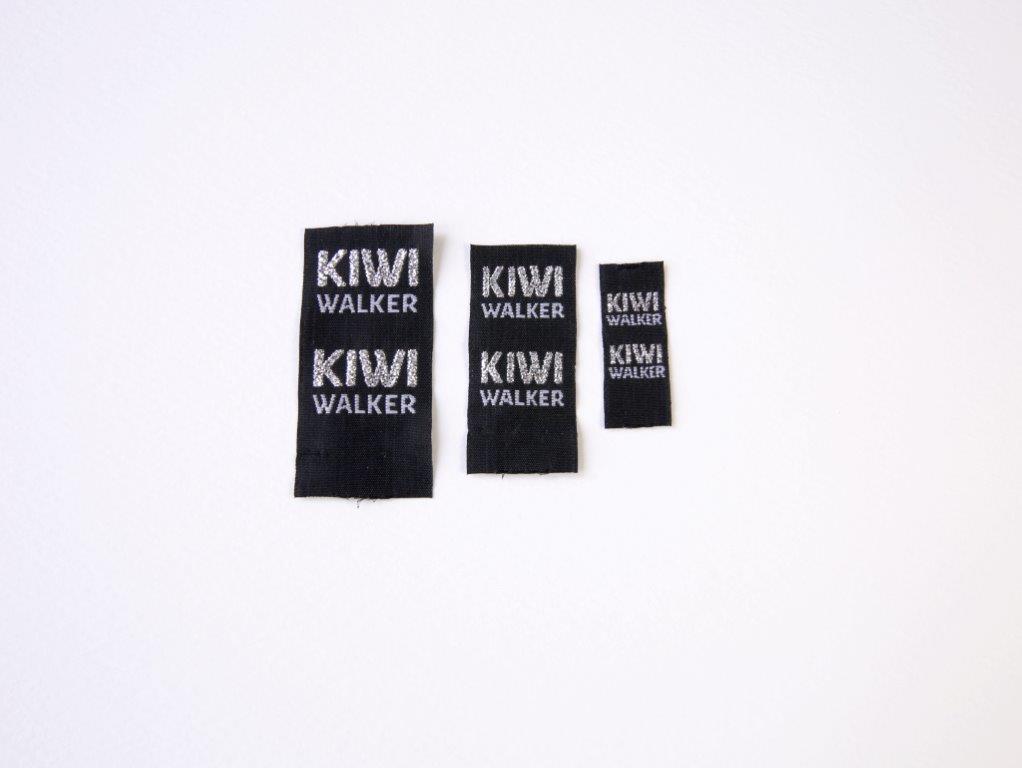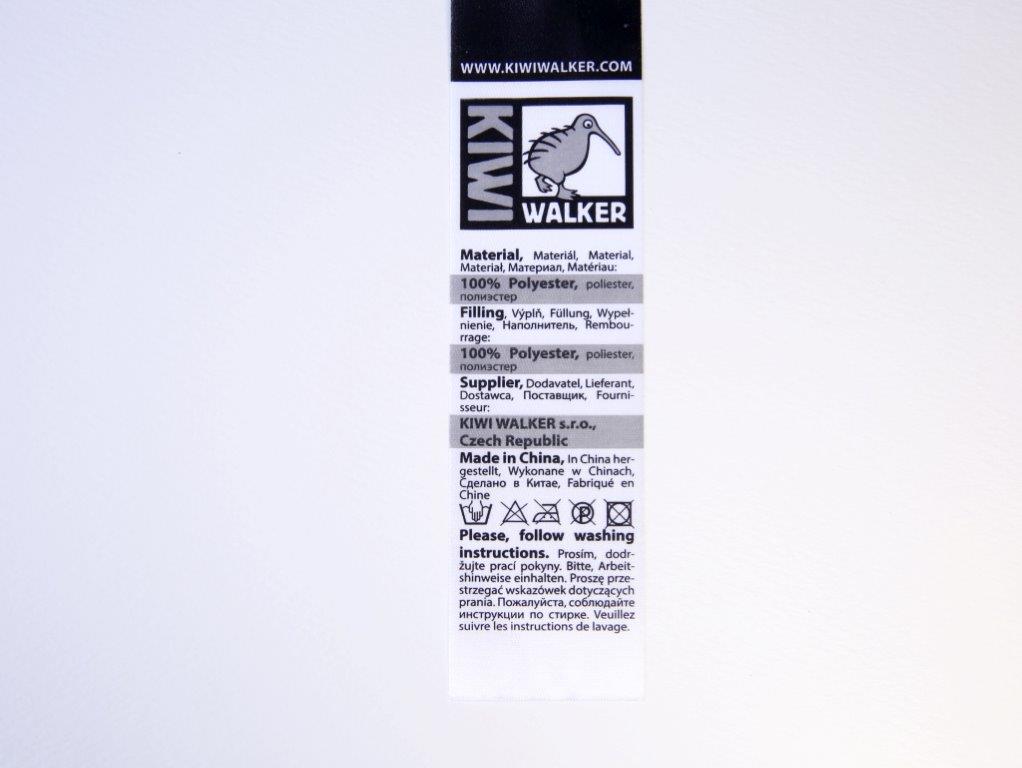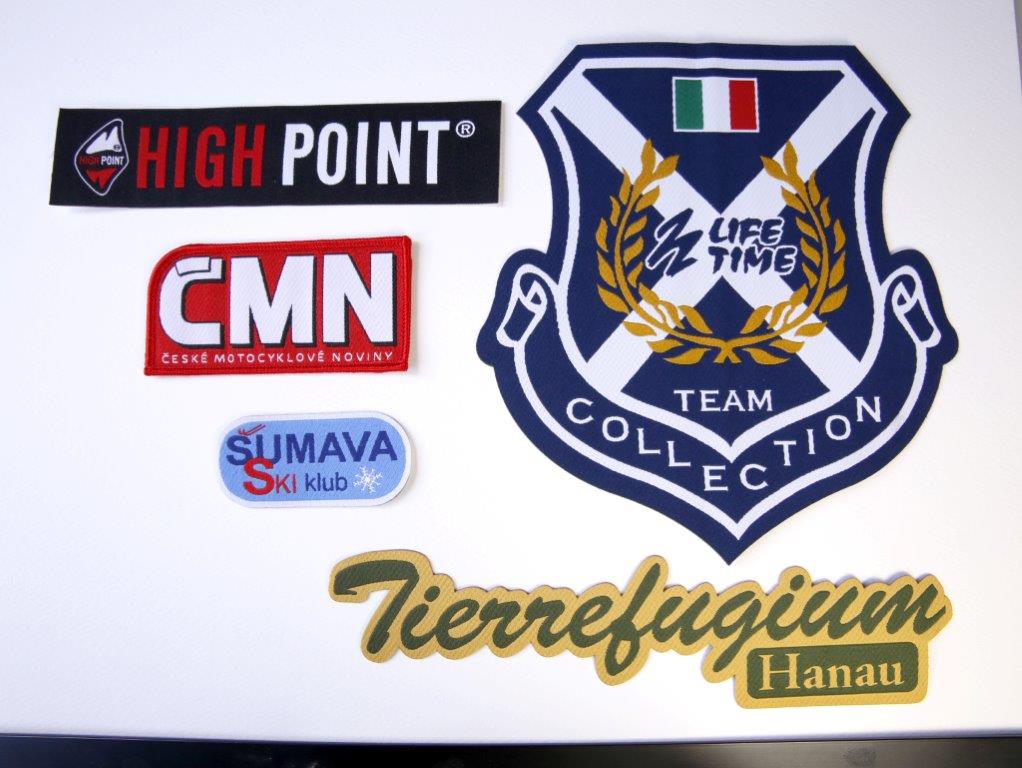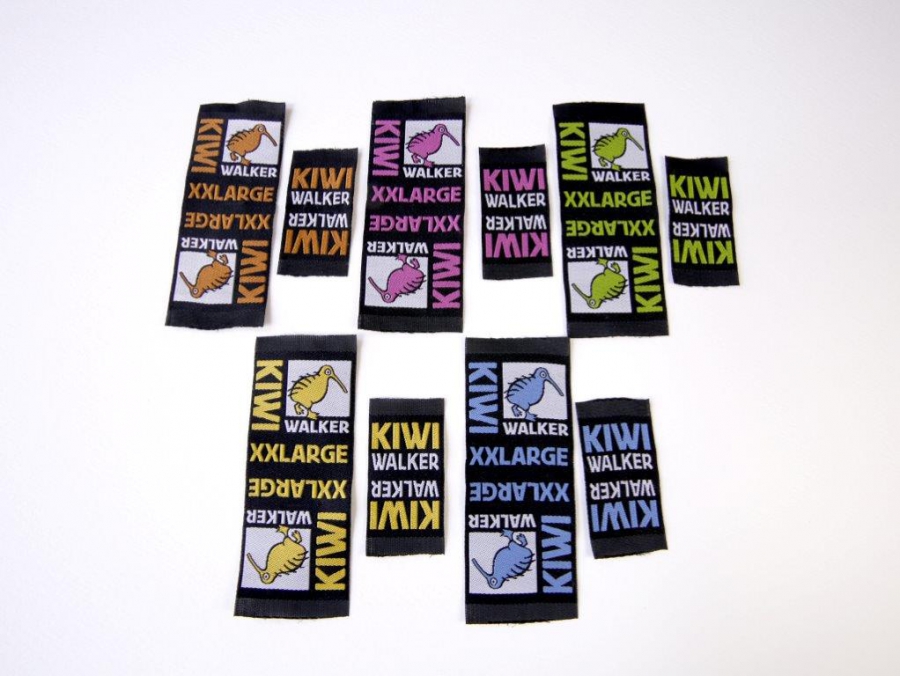
Printed tags can be, together with woven tags, included in a more general group of textile tags. These garment tags are usually made of raveled, coated fabric of various grammages. The grammage of the woven material depends on the cross-section width of the used fibers and their surface treatment, if any. The fibers of the base fabric can be of a natural (cotton) or artificial (polyester, nylon) origin. Coating of the woven base improves its resilience and gives the fabric of the given garment tags a satin to pearl appearance. Printed tags do not have to be always made of a textile material. The base structure of the printed tags often only imitates fabric or has a completely smooth surface. Unwoven printed tags are usually made of acetate. The base of the printed tags can be self-adhesive on its reverse side, which greatly simplifies applications of such tags on the clothes.
The simple principle of the printed tag production (imprint of a color pattern onto the given base material) is less expensive than weaving, embroidery or pattern pressing into leather and rubber. That is why this garment tag type is relatively cheap. One of the advantages of the printed tags is (apart from their price) their resilience to high temperatures and aggressive chemicals. Depending on the type of their base material, some of the printed tags can be washed at temperatures of 60-95 °C. Alternatively, they can be cleaned chemically. Printed tags are more suited for the production of graphically less demanding information tags than for the production of decorative tags. They are then sewn to seams. Most commonly, they provide information about the given manufacturer, material composition, size and the treatment manner of the given clothes.